The Odyysey is cool and meaningful. Now let’s get into it with a review slightly shorter than the source material.
How do you take a three-thousand-year-old novel, steeped in gods and history, and make it relevant in 2026? Put it in Christopher Nolan’s hands. The epic film event is back. We haven’t seen a story of this scope and intimacy since Peter Jackson’s Lord of the Rings trilogy at the start of the century.
The Odyssey is the latest take on Odysseus, who leaves for the Trojan War and leaves behind a son who grows up fatherless and a wife fending off suitors with bad intentions.
The movie opens thunderous, with a sound mix too loud to catch the dialogue. Score and sound effects drown out characters revealing who they are, and the stakes for the rest of the film. Thankfully, the levels settle after the first act, and that’s when the film hits its stride.
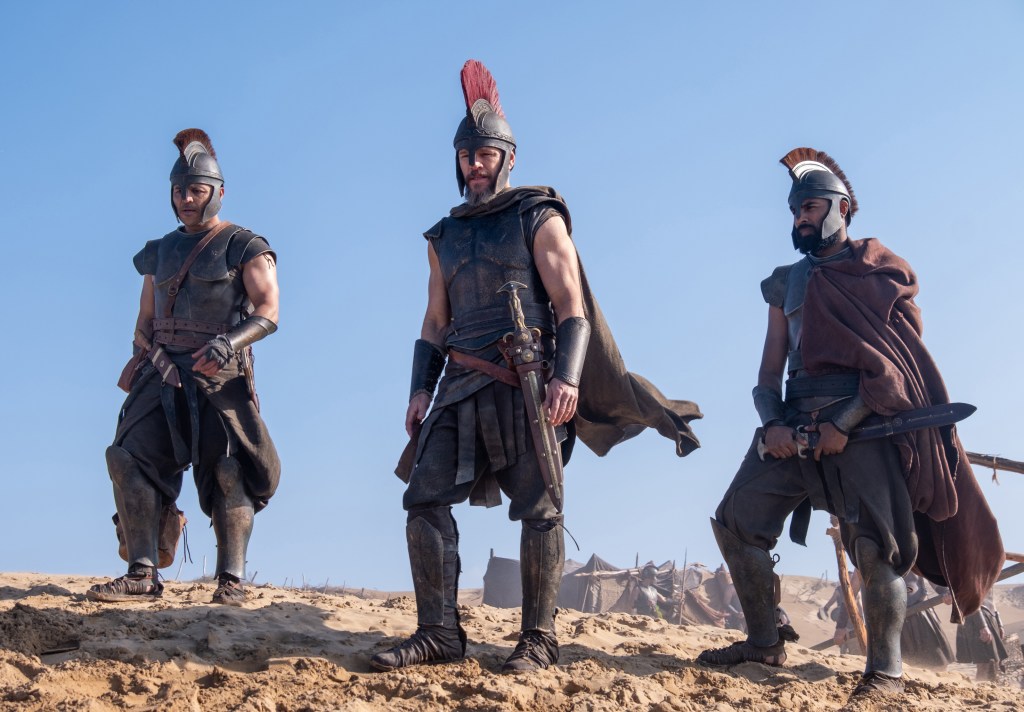
A tense battle for Troy gives way to trials for Odysseus’s army on the journey home that prove more terrifying than war, each one as frightening as it is formative, sharpening the moral compass Odysseus carries home. Odysseus’s men wander into a cave looking for supplies, when a boulder seals the entrance behind them. What’s waiting for them is a giant who eats his way through the crew one skull at a time. The only door out runs straight through him. Then comes Charybdis, a churning whirlpool that swallows ships whole, rendered so convincingly your brain has to remind you it’s not real. There’s a meeting with the dead in Hades, where a prophet’s warning forces Odysseus to face the consequences of decisions he’s already made, and the ones still ahead of him. This is where the film’s humanity balances its spectacle: characters preach the law of Zeus, welcome the stranger, for they may be a god, and then break it.
Much has been made about its “shot entirely in IMAX” badge of honor. But rather than get into cinephile specs, know that it’s worth seeing Hoyte van Hoytema’s cinematography and hearing Ludwig Göransson’s score in the best theater you can. Nolan’s commitment to practical effects pays off throughout.
The gods appear as people among the main characters, except when they reveal themselves through acts of nature. Don’t cross them. Without giving too much away: when Samantha Morton’s character shows up, alternating between victim, villain, and pathetic soul, she steals the movie.
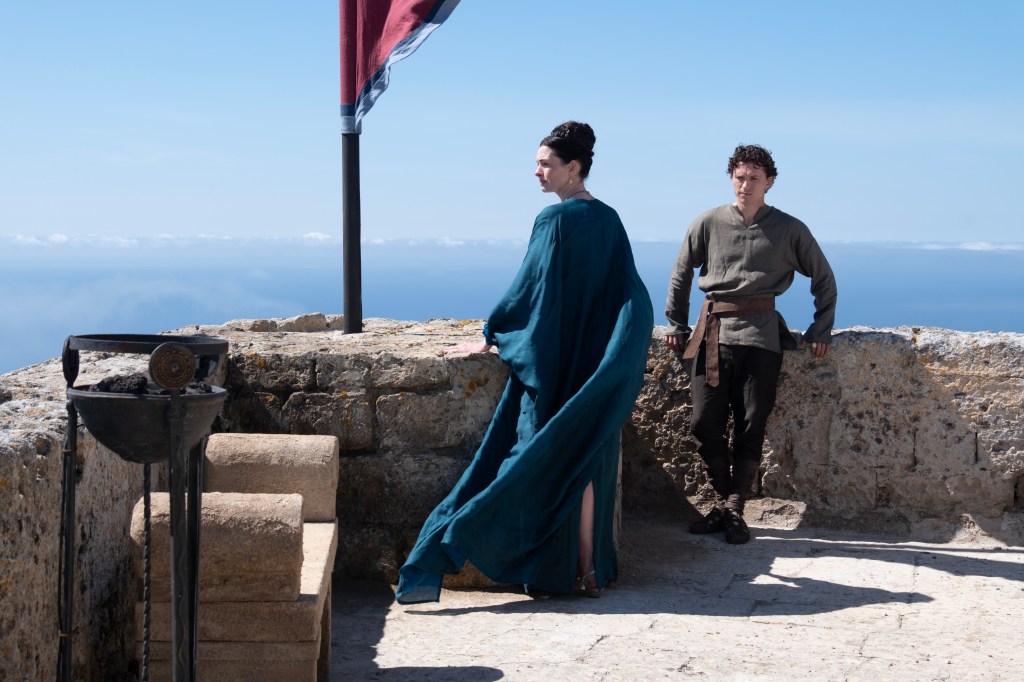
Nolan’s films draw actors who want in, and this cast earns its place. Matt Damon (Odysseus) plays a man forced to sit with the weight of his choices, in war and out of it, often tempting fate and the gods. Anne Hathaway is at her best as his patient, suffering wife, Penelope. Warding off her suitors, she weaponizes her charm to buy her husband time to return. Tom Holland (Telemachus) gives his most earnest performance. He plays the prince not as a confident hero-in-waiting, but as a young man drowning in his father’s mythic shadow. The supporting cast makes the most of every scene. Himesh Patel (Eurylochus) elevates every moment he shares with Damon. Pattinson (Antinous) chews every scene he’s given as the villain. Elliot Page (Sinon) looks like a wasted role at first, until the final act reveals the brilliance of the casting.
There’s been noise about “historical accuracy,” mostly modern language and the absence of English accents. But this is the most accessible Homer has ever been on screen. Drawn from Emily Wilson’s 2017 translation, it feels fresh, not like homework. I did a double take at “Dad” where “Father” seemed to fit better, but that’s like complaining about the toothpick at a Michelin-star restaurant.
The reunion this whole story has been building toward, father and son closing a gap years in the making, a wife’s patience finally paying off, lands with real weight. Nolan doesn’t rush it or shortchange it. For a movie this loud and this big, it’s a reminder that the war was never really the point.
A movie like The Odyssey comes along once a generation. Don’t wait to watch it while folding laundry, unless you want the captions.
9.5
Jim Chandler is a charter member of the Music City Film Critics Association and host on the Untitled Film Project Podcast. He’s spent his career creating and commenting on culture through media, including radio, web, and social. Follow Jim on socials @jimchandlernow

